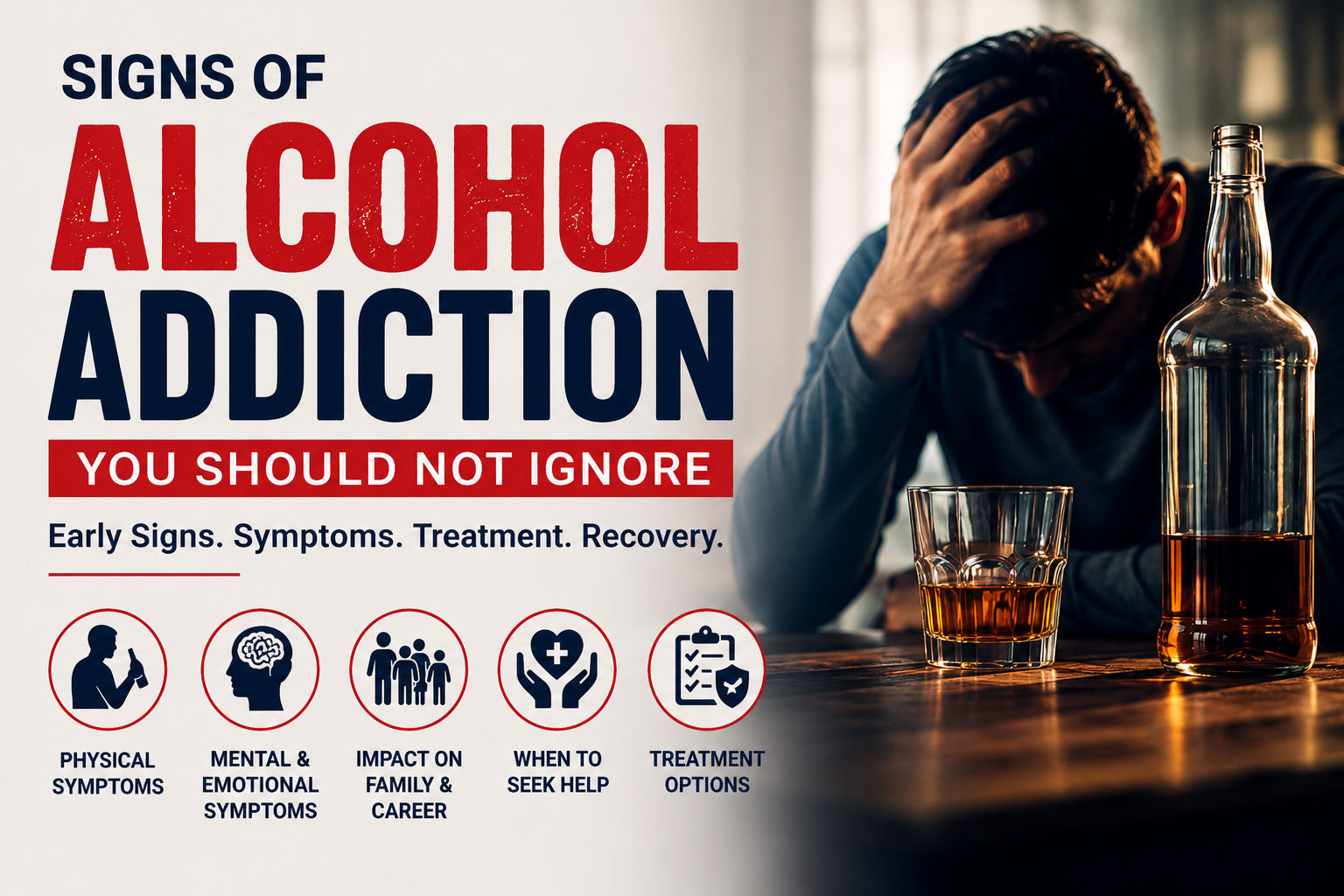
Alcohol addiction often starts quietly. A person may drink only during parties or stressful situations in the beginning. Over time, that habit can slowly become a daily need.
Many people ignore the warning signs until drinking starts affecting health, relationships, and work life. That is why understanding alcohol addiction symptoms is important.
Early action can help prevent serious emotional and physical damage. It can also improve recovery chances and help people regain control of their lives.
Early Signs of Alcohol Addiction
The early stage of alcohol addiction is difficult to notice. Most people continue their normal routine while the dependency slowly grows.
One common sign is drinking more frequently than before. Weekend drinking may turn into daily drinking within a short time.
Another warning sign is losing control over limits. The person may plan to have one or two drinks but end up drinking much more.
People with alcohol addiction symptoms often create excuses for drinking. They may say alcohol helps them relax, sleep better, or handle stress.
Mood changes also become visible during the early stage. A person may become irritated, angry, or emotionally distant without any clear reason.
Many individuals start hiding their drinking habits. They may drink secretly or avoid discussing alcohol with family members.
Forgetfulness is another early sign. Blackouts and memory gaps after drinking should never be ignored.
Loss of interest in hobbies and social activities can also happen. Alcohol slowly becomes more important than daily responsibilities or personal goals.
Physical Symptoms of Alcohol Addiction
Alcohol addiction affects the body in several ways. Some symptoms appear slowly, while others become noticeable within a short time.
One major physical sign is increased tolerance. The person needs more alcohol to feel the same effect they once experienced with smaller amounts.
Frequent headaches and constant tiredness are also common. Alcohol affects hydration levels and reduces energy over time.
People experiencing alcohol addiction symptoms may struggle with sleep problems. Some sleep too much, while others face insomnia regularly.
Changes in appetite are another warning sign. Sudden weight gain or weight loss may happen because alcohol affects eating habits and digestion.
Shaking hands in the morning can indicate alcohol dependence. Tremors often appear when the body starts craving alcohol after long gaps.
Digestive issues are also common. Nausea, vomiting, acidity, and stomach pain may develop because alcohol irritates the digestive system.
Red eyes, pale skin, and an unhealthy appearance often become noticeable. Long-term alcohol use also affects liver function and overall immunity.
Poor balance and slow coordination can increase the risk of falls and accidents. These symptoms should never be ignored.
Mental & Emotional Symptoms
Alcohol addiction does not only affect physical health. It also creates serious emotional and mental struggles.
Anxiety is one of the most common mental health issues linked to alcohol addiction. Many people drink to reduce stress, but alcohol often makes anxiety worse later.
Depression can also develop gradually. A person may feel emotionally empty, hopeless, or disconnected from family and friends.
Mood swings become frequent. The individual may react emotionally to small situations and struggle to stay calm.
People with alcohol addiction symptoms often face concentration problems. Simple daily tasks may become difficult because alcohol affects brain function.
Guilt and shame are also common emotional signs. Many people know their drinking habits are harmful but feel unable to stop.
Some individuals isolate themselves from others. They avoid social gatherings, family conversations, and emotional discussions.
Aggressive behavior may also increase. Alcohol can reduce emotional control and lead to arguments or impulsive actions.
Stress management becomes difficult without alcohol. The person may feel emotionally dependent on drinking to handle normal life pressure.
Ignoring emotional symptoms can make addiction more severe over time.
Impact on Family & Career
Alcohol addiction affects not only the individual but also the people around them.
Family relationships often become stressful. Repeated promises to stop drinking may break trust between loved ones.
Arguments at home become more common. Small issues may turn into major conflicts because alcohol affects emotional balance.
Children living with addicted parents may experience fear, stress, and emotional insecurity.
Financial problems can also appear. A person may spend excessive money on alcohol instead of household needs or savings.
People with alcohol addiction symptoms sometimes avoid family members completely. They may prefer isolation over communication.
Career performance also suffers. The person may arrive late to work, miss deadlines, or lose focus during important tasks.
Reduced productivity and poor decision-making can affect workplace relationships. In severe cases, addiction may even lead to job loss.
Social relationships become weaker over time. Friends and relatives may slowly distance themselves because of repeated behavioral issues.
When to Seek Help
Many people delay treatment because they believe they can stop drinking anytime. Unfortunately, addiction often becomes stronger without professional support.
You should seek help if alcohol starts affecting health, emotions, work performance, or relationships.
Withdrawal symptoms are serious warning signs. Sweating, shaking, anxiety, nausea, or panic after stopping alcohol may indicate dependence.
Repeated failed attempts to quit drinking also suggest addiction. Wanting to stop but being unable to control drinking habits is a major concern.
Family members should also seek guidance if they notice dangerous behavior, emotional instability, or severe mood changes.
People with alcohol addiction symptoms may deny the problem in the beginning. Supportive conversations and professional counseling can help them accept treatment.
Early treatment improves recovery chances and reduces long-term health risks.
Treatment Options
Alcohol addiction treatment depends on the person’s condition and recovery needs.
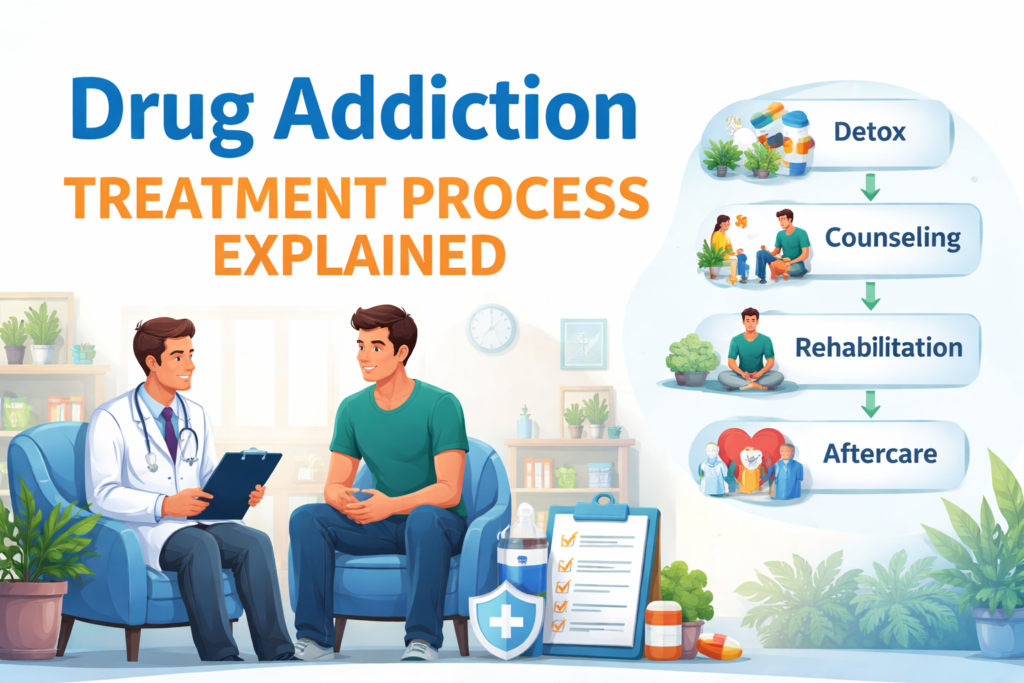
Detoxification is usually the first step. Medical professionals help remove alcohol safely from the body while managing withdrawal symptoms.
Therapy and counseling play an important role in recovery. They help people understand emotional triggers and unhealthy drinking patterns.
Cognitive Behavioral Therapy, also called CBT, is commonly used during addiction treatment. It helps individuals build healthier coping habits.
Group therapy also supports recovery. Talking with others facing similar struggles can reduce loneliness and emotional pressure.
Family counseling may help rebuild trust and improve communication within the home.
Some people require residential rehabilitation programs. These centers provide structured treatment, medical care, and emotional support.
Outpatient programs are also available for individuals with mild or moderate addiction. Patients continue daily activities while attending therapy sessions.
Healthy lifestyle changes improve recovery outcomes. Good sleep, proper nutrition, exercise, and stress management help maintain emotional stability.
Recovery takes time, but proper treatment and support can help individuals build a healthier future.
FAQs
What are the first signs of alcohol addiction?
Early signs include frequent drinking, loss of control, mood swings, hiding alcohol use, and increased tolerance.
Can alcohol addiction affect mental health?
Yes. Alcohol addiction can increase anxiety, depression, stress, emotional instability, and concentration problems.
Is daily drinking considered addiction?
Not always. However, daily drinking combined with dependence, cravings, or withdrawal symptoms may indicate alcohol addiction.
How do families get affected by alcohol addiction?
Families may experience emotional stress, trust issues, financial problems, and relationship conflicts because of addiction.
When should someone seek professional help?
A person should seek help when alcohol starts affecting health, emotions, work performance, or relationships.
Can alcohol addiction be treated successfully?
Yes. Proper medical care, counseling, therapy, and support systems can help people recover successfully.
Conclusion
Alcohol addiction often develops slowly, but its impact can become severe if ignored. Physical symptoms, emotional struggles, and behavioral changes usually appear before the condition becomes dangerous.
Recognizing alcohol addiction symptoms early can help individuals seek treatment before major health and relationship damage occurs.
Recovery is possible with the right guidance, medical support, and emotional care. Every small step toward treatment can create positive change.
If you or someone close to you is showing signs of alcohol addiction, seeking professional help today can lead to a healthier and more stable future.
Take the First Step Toward Recovery
Alcohol addiction can affect health, relationships, and daily life. Early support can make recovery smoother and more effective. At Swetank Nasha Mukti Kendra, we provide professional care, emotional support, and personalized treatment programs to help individuals rebuild a healthy life.
Contact our team today and begin your journey toward a safer, happier, and addiction-free future.